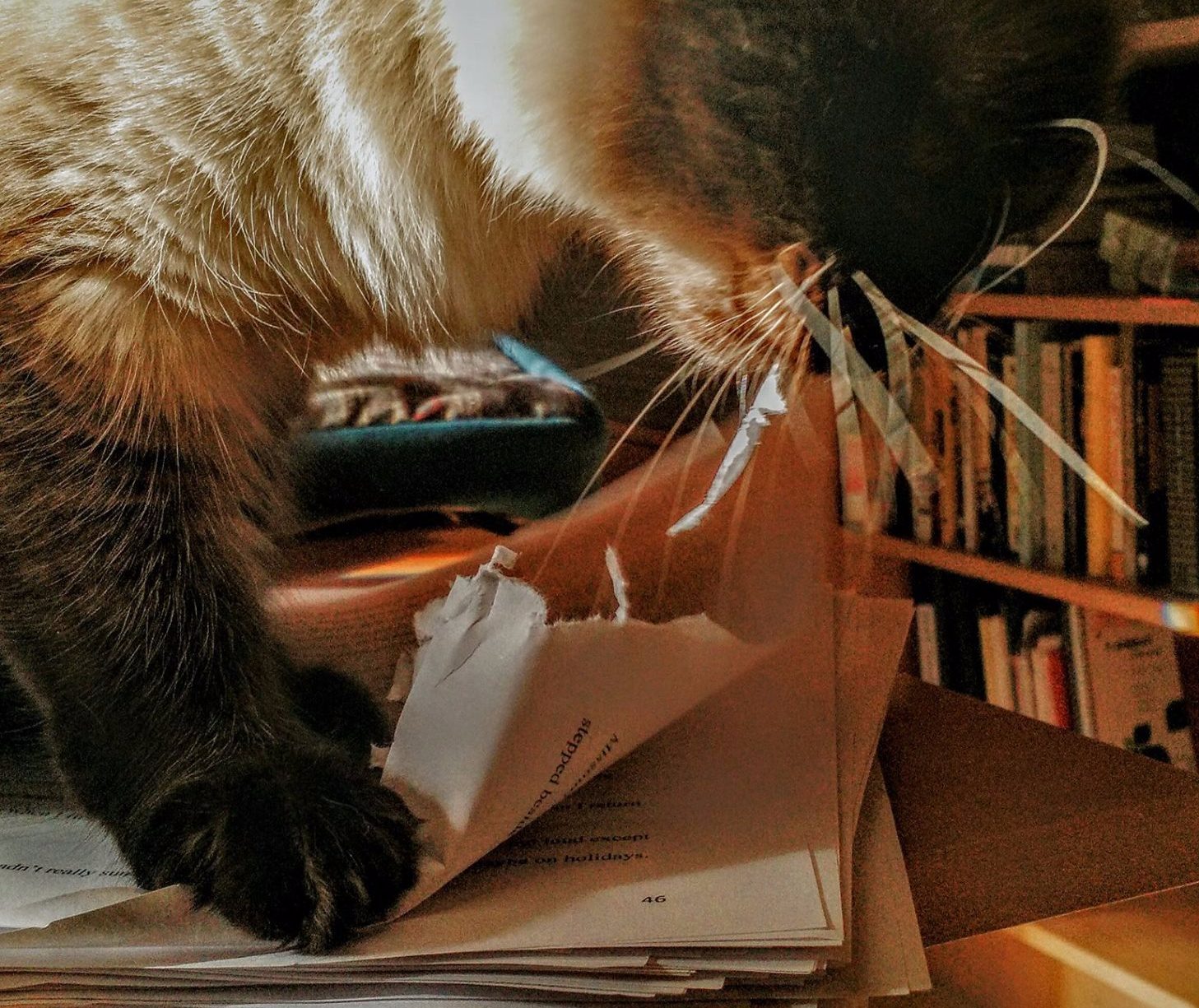
Text in the City

She’s in New York City, my novel’s protagonist. She’s in his office, likely, or he’s taken her home with him in a taxi and he’s making a drink while she waits by the fire. Then maybe he’ll prop up his feet and wonder why she was “enthusiastically” recommended by one of his clients.

I try not to worry., Phoebe can take care of herself. She’ll stand there, her one eye riveted on the agent, her arms crossed like she means business. She’s wearing those old hightop grandma shoes and her black braids are wound around her head like some ghost from the Old Country.  Maybe he’s a little afraid of her.

“What’s your story?” he’ll mumble to himself, which is the opening she’s been waiting for. She’ll start with that spring afternoon in 1920. I’m sick of hearing about it myself, but she always begins there. She’ll describe how the old horse shied in the storm and the bridge collapsed right at her heels. She’ll tell him what she did – really, what she didn’t do – and how she thinks that changed everything that came after. She’ll talk about Rudy, Will, even Missouri, because that woman always attracts men’s attention.

I’m not too nervous how Phoebe will do. Getting a chance to tell her story clear to the end will be good practice. At least I hope he lets her finish. I hope he’s struck by how she sees the world, how unsentimental she is. How she’s, as she says, “brave as beans.” No one’s probably ever heard the phrase brave as beans in Manhattan until now.

Because I made it up. I mean, Phoebe made it up.

Celebrating rejection

It would be so awkward if I experienced immediate success, I thought yesterday. My blog would be unrealistic and difficult for other writers to relate to. So I have something to celebrate today  –  no awkward success has cursed me!

This morning, the agent I queried Thursday emailed No Thanks in the best possible way: You are a beautiful writer…I encourage you to pitch other agents…I am sure you will find someone…but I didn’t connect with the story in the way that I hoped I would.

A friend of mine has heard that last phrase several times, so perhaps it’s from the Manual of Excellent I-Messages for Nice Agents. Still, this agent responded so quickly and with such kindness I am not discouraged.

I just (!) have to find an agent who does connect, and passionately.  An agent’s job is daunting. No publisher is already daydreaming how much money they’d make if only one of their editors were approached by an agent who has found an author with 71,000 beautiful words describing a half-blind woman’s life in Depression-era Oklahoma.

I remain (brashly?) confident. Go figure. Surely it’s too early for that line in Harry Chapin’s ballad, “Mr. Tanner”: full-time consideration of another endeavor might be in order. So now that I’ve vented here a bit (thank you, Reader), I’ll celebrate. I’ll print off my kind email and tape it on my office wall. Then I’ll curl up and connect with my Kindle and dear dog Jonah, whose adoration, as you can see in the photo above, is immediate, non-commercial, and whole-hearted.

What are your experiences with agents? Do you celebrate rejection often? What has worked for you? Are dogs or cats better with unconditional support?


What have I done?!

I just sent the novel’s first ten pages to the agent my consultant (“beta reader”?) recommended. I cannot possibly write a full blog right now; I can barely write full sentences or spelll werds. I can only stare at the computer screen with the same expression you see above on Muriel’s face. I’ve read not to give up until you’ve contacted 70-80 agents, so I promise not to post each time, but we’re off and running, my friends!

Writing the terrarium

While I worked to get The Novel ready for an agent this week,  an autumn drama unfolded outside my office window. Alternating acts of brilliant sun and sparkly showers were staged before a backdrop of Doug Firs and Western Red Cedars. Though I deserve zero credit for how these native trees thrive, I admire their green perennial border towering behind my garden of gold, red, and purple maples, smoke trees, and mahonia bushes.

Writing my novel was similar to gardening with Doug Firs, but drafting a synopsis this week felt like planting a terrarium. Or, as Aladdin said, “Phenomenal cosmic power! Itty bitty living space.”  The web offered much advice on how to boil  my 71,000 words down to entice an agent or editor to read further. First, introduce the premise, setting, and main characters. Next, summarize each important scene. Then revise those summaries so the plot unfolds clearly without gaps. Revise again to highlight the developmental arc of each character. Finally, edit carefully. Avoid vague teasers—it’s not to read like a back-of-the-book blurb. And waste no space on voice, lyrical writing, or metaphor.

Oh dear me. My mind is mostly metaphor. 89%. Everything is like something else in there. Concise is not my gift. My synopsis sucked in all ways and enticed in none. And was way too big for the little glass jar.

About then, I got an email from my consultant asking if I was ready to for an agent—was the manuscript formatted and did I have a paragraph about the book? Could this mean a 500-word lab report on the tortured corpse of my  dissected novel was unnecessary? I’m waiting for that answer, but meanwhile here’s the paragraph I’ve drafted:

In this literary novel, Phoebe, a farm wife and mother of four, wears a glass eye after a haunting childhood accident and fears what might blind-side her across the wide prairies of Oklahoma. When a storm sweeps away a bridge and strands her by a flooded gully, the harrowing rescue of the baby she’d forgotten in the wagon has consequences the family never fully resolve. Her husband Rudy struggles to harmonize his innate optimism with economic failure and betrayal. His brother Will evolves from a manipulative gambler to family martyr. Will’s wife Missouri, fresh from the city brothel, battles for respect and a family of her own. The sections of the story unfold in five different years between 1920 to 1941 as Phoebe tallies her losses and small quiet victories, and learns to press forward with courage.


What do you think about this terrarium paragraph? Do any phrases make you want to read more? Do you have any experience with synopsises? Synopses? Or heck, let’s just talk gardening…